Complex B2B pricing, large catalogues and enterprise procurement.
When ERP terms, product information and procurement systems come together, commerce needs a shared operational basis. Paul Wiegand illustrates the approach.
A business customer expects agreed pricing and reliable availability in the store. Procurement teams may also require punchout workflows. The data and rules often live in the ERP while product information is maintained elsewhere.
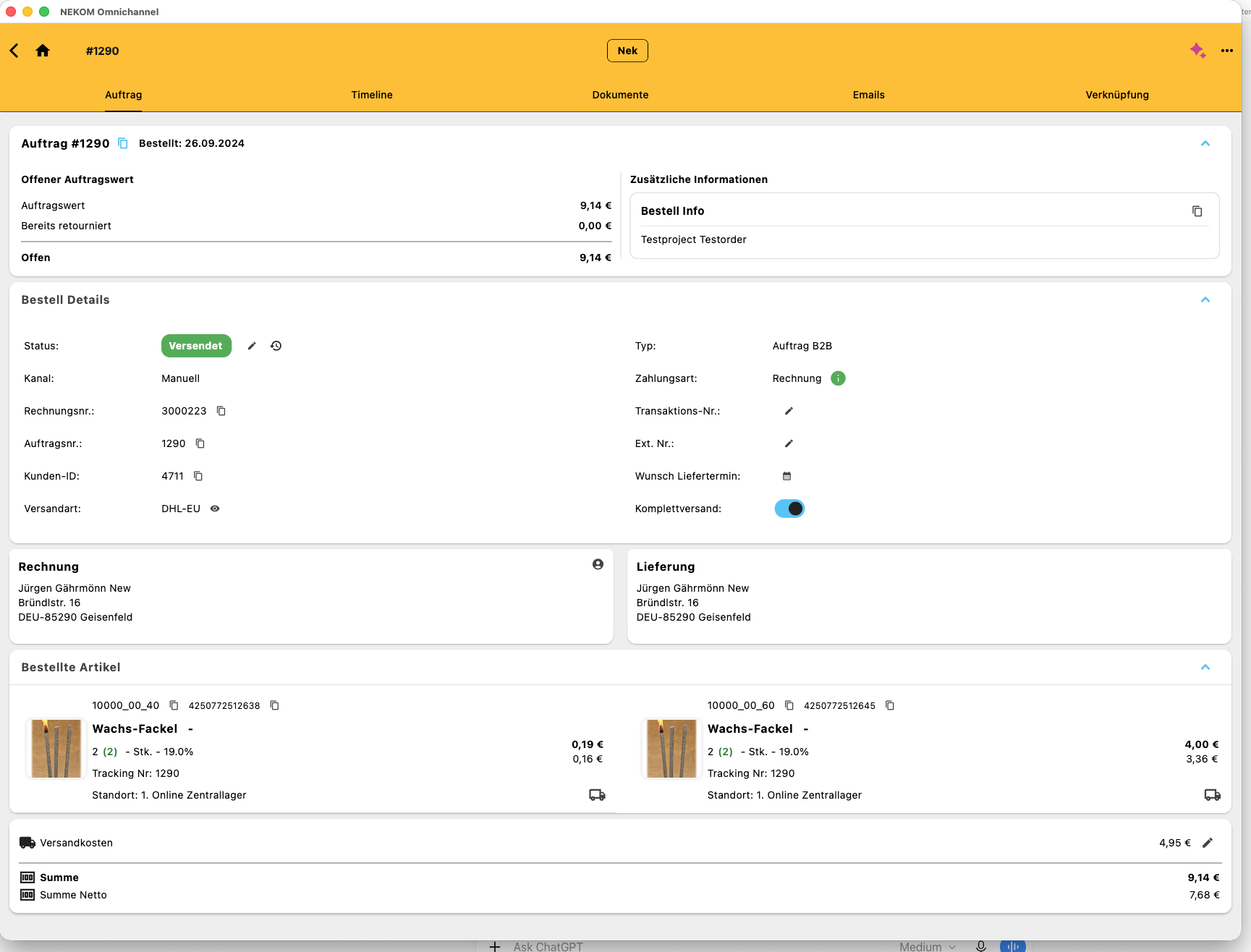
NEKOM OMS · Representative order view. Not the Shopify interface or a screenshot of a named customer project.
THE CHALLENGE
Where everyday operations become complex.
A business customer expects agreed pricing and reliable availability in the store. Procurement teams may also require punchout workflows. The data and rules often live in the ERP while product information is maintained elsewhere.
Customer-specific commercial terms rather than one store price
Large catalogues with ERP-managed business and availability data
Order and claims workflows in an individual customer context
Enterprise procurement and SAP OCI Punchout in the specific project
WHEN DATA TRANSFER ALONE IS NOT ENOUGH
The rules between systems matter.
The challenge is not the commerce platform alone. It is the interaction of customer identification, ERP, pricing, product information and procurement systems. Data ownership and responses need to be defined instead of maintaining the same commercial terms separately in several systems.
HOW NEKOM CONNECTS THE WORKFLOW
Individual systems become an aligned workflow.
Customer context determines the relevant terms. NEKOM coordinates the required data and process interactions; ERP provides the pricing and availability it owns. The store presents the appropriate information and orders continue into operations. At Paul Wiegand this architecture brings BigCommerce, SHOPMACHER and NEKOM together with ERP.
01B2B customer / BigCommerce
02NEKOM
03ERP: price & availability
04Response → store / order → ERP
Identify the business customer in commerce
Coordinate terms and availability with ERP
Present the appropriate store information
Continue orders and downstream operations
Conceptual diagram. Configuration, interfaces and supported workflows are agreed for each project.
THE ACTUAL PRODUCT
What happens after data reaches NEKOM?
Authentic NEKOM application views. The visible information is test data. These views illustrate general functions, not a named customer’s production system.
NEKOM PIM
One product record. One shared working view.
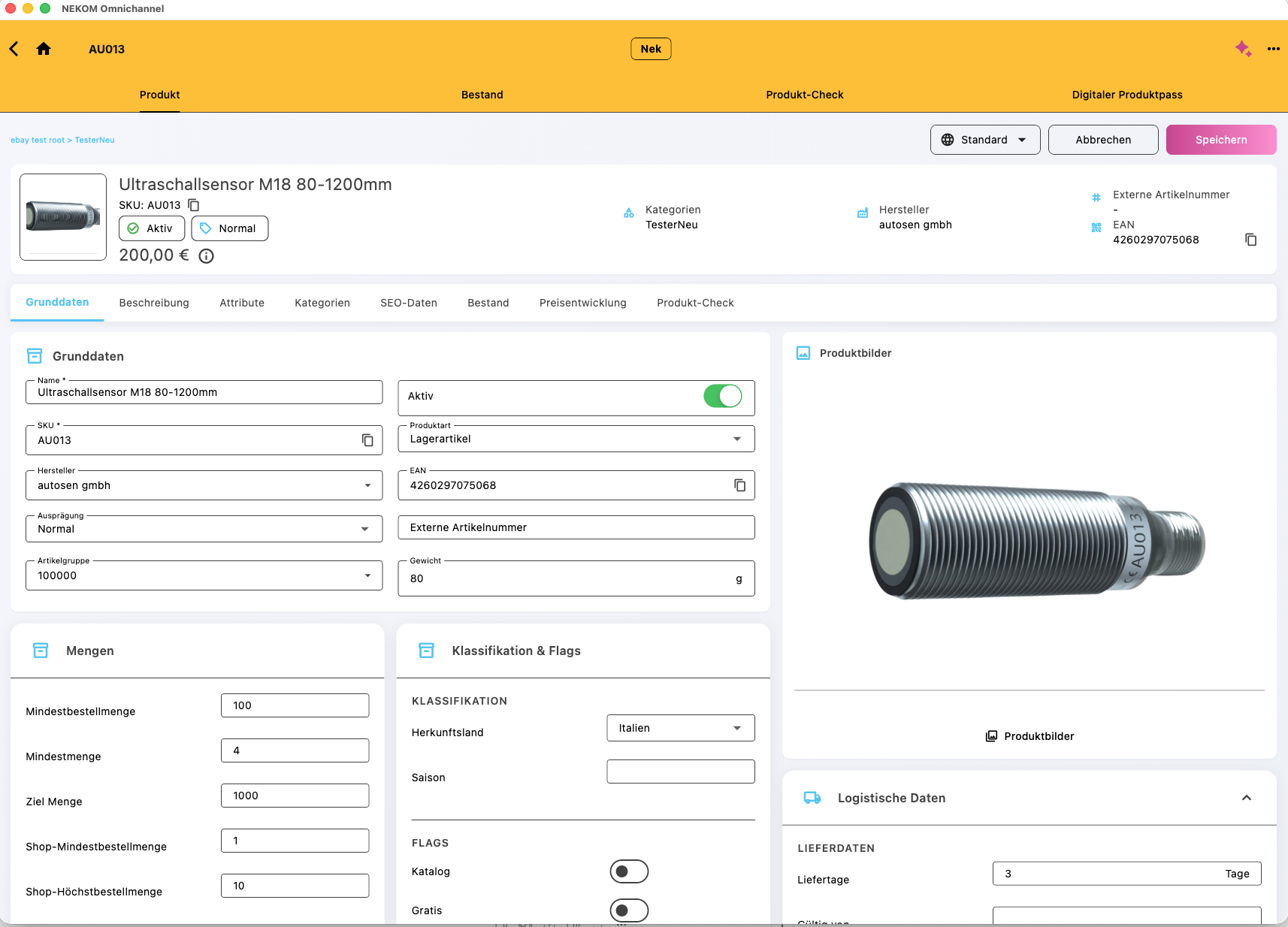
The visible master data includes SKU, name, product type, EAN, manufacturer, category and product image. Tabs lead to attributes, SEO, inventory, prices, quantities and logistics. Not every function is visible in this single open area.
NEKOM PIM · Representative product view. Tabs point to additional areas; their contents are not open in this view.
NEKOM OMS
From the order to delivery.
The detail view brings together status, order items, customer context, billing and delivery information. It illustrates operational handling after an order reaches NEKOM.
NEKOM OMS · Representative order view. Not the Shopify interface or a screenshot of a named customer project.
OPERATIONAL VALUE
More clarity. Less repetitive manual work.
Use contract prices from the responsible system
Bring product information and terms into one workflow
Reduce manual handovers and duplicate maintenance
Connect procurement to operational order handling
For your agency
SHOPMACHER’s role at Paul Wiegand illustrates the division of work: frontend and UX on one side, operational integration and orchestration through NEKOM on the other. The exact split is agreed for each project.
Paul Wiegand: more than 100,000 products, around 45% of order volume through the platform and four people managing the catalogue. These published figures describe this customer project, not universal NEKOM outcome guarantees.