NEKOM OMS
Relevant orders in one view.
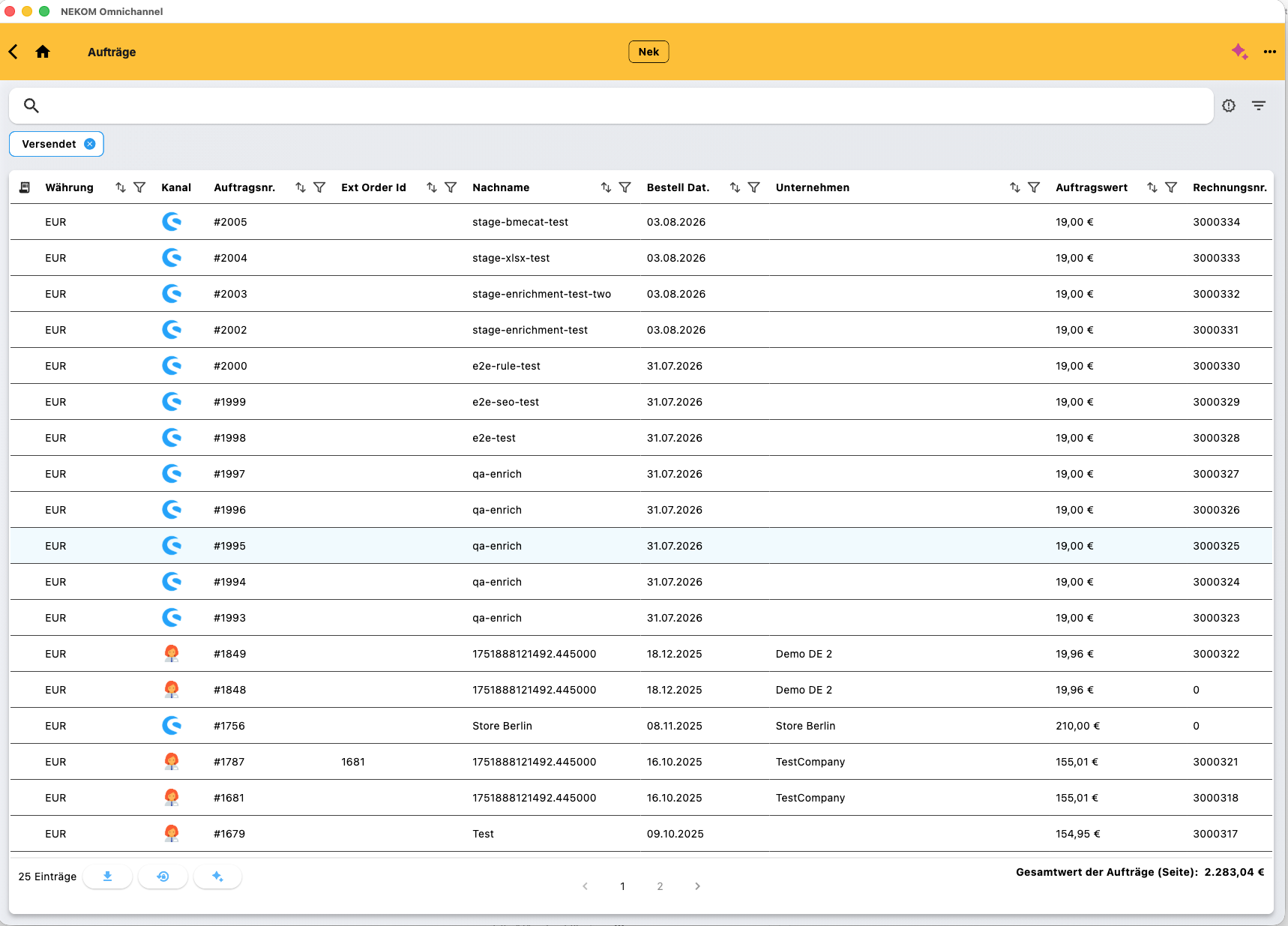
The order overview shows orders from connected channels. Search, filters and sorting support everyday handling. Status and references provide operational context.
Inventory & Fulfilment Orchestration
Bring owned warehouses, stores and suppliers into one operational design. NEKOM supports order and fulfilment workflows across connected systems.
An order contains several items, but they are not all in the same warehouse. One ships from your operation, another directly from a supplier. Shipping updates, reservations and later returns still need to stay connected to the order.
Discuss Your Use CaseTHE CHALLENGE
An order contains several items, but they are not all in the same warehouse. One ships from your operation, another directly from a supplier. Shipping updates, reservations and later returns still need to stay connected to the order.
WHEN DATA TRANSFER ALONE IS NOT ENOUGH
Transferring an order does not by itself establish which location ships an item. A simple sum of inventory does not determine what can actually be sold. These decisions depend on business rules and connected systems, not an assumed optimisation algorithm.
HOW NEKOM CONNECTS THE WORKFLOW
NEKOM OMS and WMS connect order context, inventory sources and agreed fulfilment steps. The fulfilment-source decision is designed as a business handover point. Status and shipping information can flow back to the channel. Returns and credits must be considered in the same workflow. Exact scope depends on the project and connected systems.
Conceptual diagram. Configuration, interfaces and supported workflows are agreed for each project.
Example: item A ships from your own warehouse and item B directly from a supplier. NEKOM supports coordination within the agreed process scope.
Item A→Own warehouse
Item B→Supplier / dropshipping
Illustrative workflow, not evidence of a specific automatic routing or optimisation method. Splits, status updates and returns depend on configuration.
THE ACTUAL PRODUCT
Authentic NEKOM application views. The visible information is test data. These views illustrate general functions, not a named customer’s production system.
NEKOM OMS
The order overview shows orders from connected channels. Search, filters and sorting support everyday handling. Status and references provide operational context.
NEKOM OMS
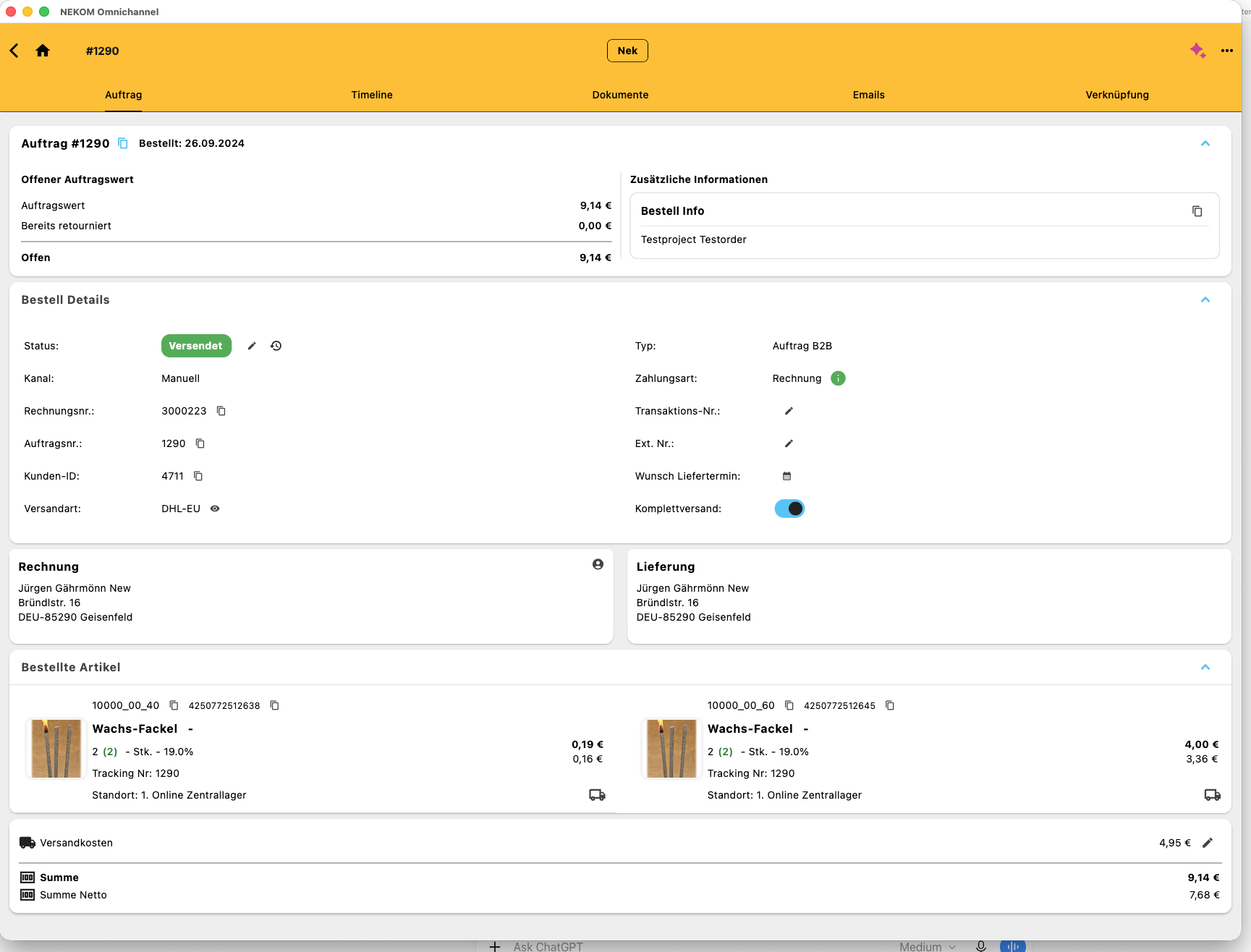
The detail view brings together status, order items, customer context, billing and delivery information. It illustrates operational handling after an order reaches NEKOM.
OPERATIONAL VALUE
This use case applies across channels, not exclusively to Shopify. Agencies can include fulfilment sources and handovers early in solution design and avoid placing all operational decisions into the user interface.
PLATFORM & INTEGRATIONS
Process orders from different channels centrally and connect them to ERP, warehouse and service.
02Bring multiple warehouses and suppliers into connected logistics workflows.
03Prepare inventory from existing ERP, supplier and POS systems for digital sales channels.
04Register returns in a structured way and connect handling to downstream processes.
CUSTOMER EVIDENCE & CONTEXT
Anonymous NEKOM examples describe bringing store and supplier inventory into operations. Applicability and possible order splits are assessed against the systems involved.
Explore customer storiesBring warehouse, supplier and ERP inventory together for commerce.
02Handle returns, approvals and service in the context of the order.
03Connect Shopify to inventory sources, suppliers and operational rules.
FOR BUSINESSES
Discuss your systems, responsibilities and the most useful first workflow with us.
Discuss Your ProjectFOR AGENCIES
Your commerce expertise and our operations platform: let’s define the right way to work together on your client project.
Become a Partner